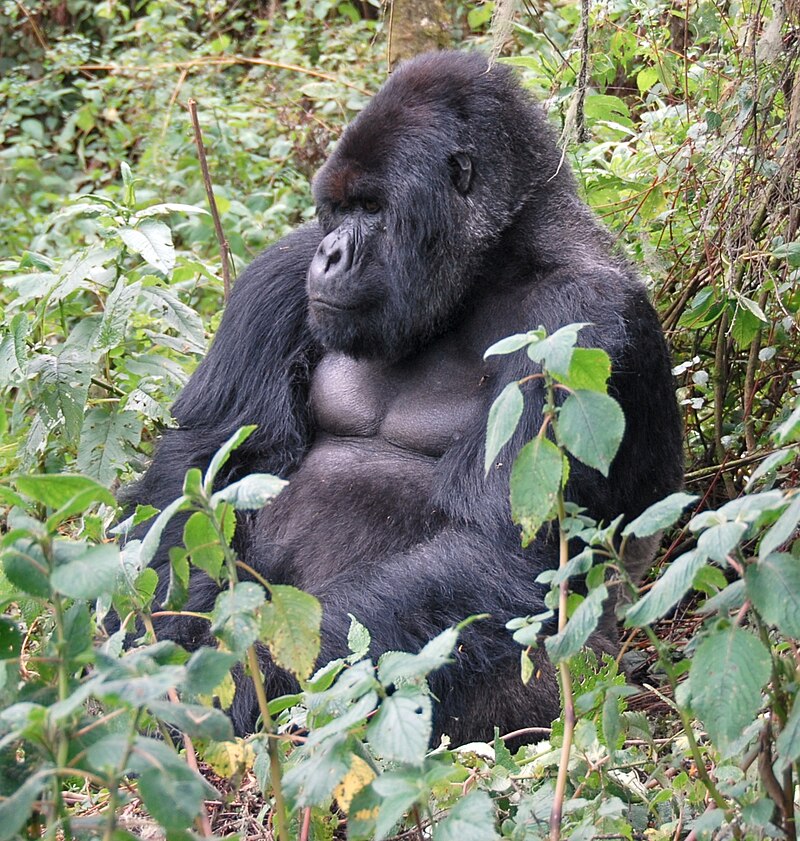
PHOTO VIA WIKIPEDIA, CC BY-SA
Least ConcernCritically EndangeredExtinct
The picture
Mountain gorillas are one of conservation’s great comeback stories: careful protection and community-based tourism lifted them above 1,000 individuals. They share about 98% of their DNA with humans.
The science
Genus Gorilla. They live in close family groups led by a dominant “silverback” male.
In numbers
~98%DNA shared with humans
Worth repeating at dinner
Gorillas share around 98% of their DNA with humans.
- WCS
Each gorilla has a unique nose print, like a fingerprint.
- WWF
What they face
Disease transmission
Human illnesses can devastate gorilla groups.
WCS
Habitat loss
Farming and mining shrink forest habitat.
IUCN
What is already working
Community tourism
Well-managed tourism funds ranger protection.
Health monitoring
Vets track and treat gorilla groups in the wild.
Reasons for hope
Mountain gorillas passed 1,000
A rare population increase for a great ape.
Meet them
Small actions that reach them
Donate to a vetted org
Effective orgs turn funds into ranger patrols, habitat and rescue capacity.
Switch a product to palm-oil-free
Unsustainable palm oil drives tropical deforestation that destroys orangutan, tiger and elephant habitat.
Teach a child one animal fact
Early nature connection is the strongest predictor of lifelong conservation behavior.
Vet a wildlife attraction before booking
Millions of tourists fund animal cruelty by accident - five minutes of checking (rides? touching? shows? breeding?) is all it takes to spot it.
People doing the big work
Hopeling is also a pocket companion: one fact, one small act a day. Open the app